The Invisible Tax of Not Tracking Your Money
You don't need a stricter budget. You need to see clearly. Here is why visibility, not discipline, is the first real step toward control.
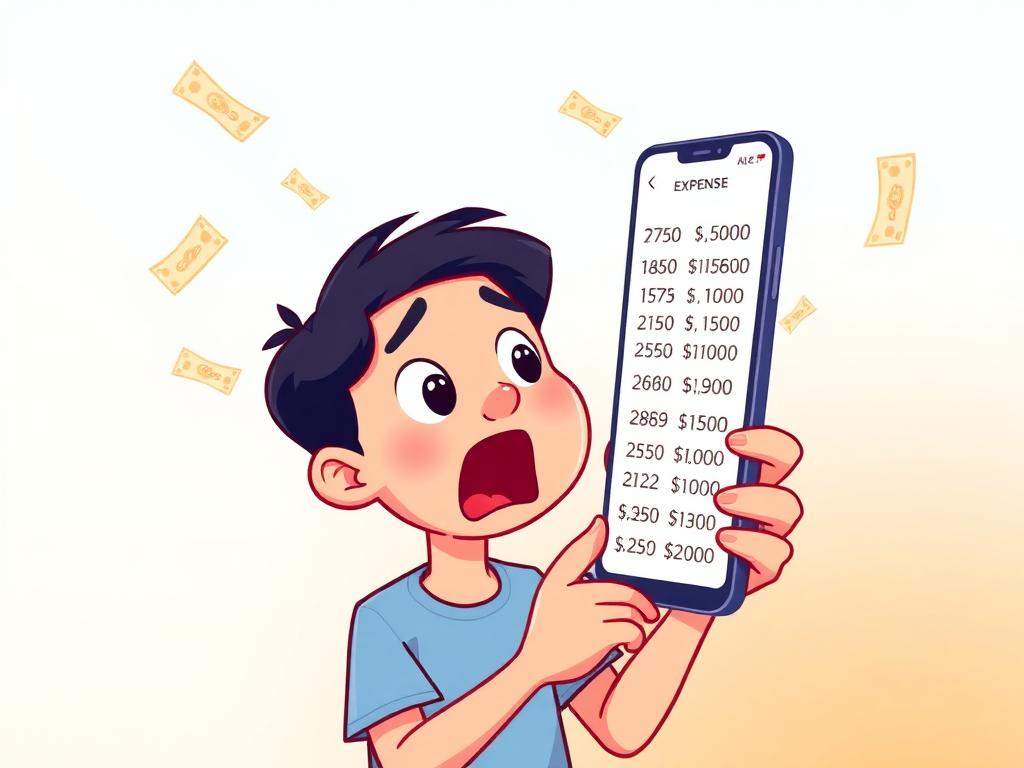
You don’t need a stricter budget. You need to see clearly. Here is why visibility, not discipline, is the first real step toward control.
There is a cost you pay every month that never shows up on any bill. It is not a fee, an interest charge, or a subscription you forgot to cancel. It is quieter than that. It is the money that simply disappears, absorbed into a week you cannot quite reconstruct, a card you tapped without thinking, a total at the end of the month that does not match the picture in your head.
Call it the invisible tax of not tracking your money. You are not being robbed. You are not being careless, exactly. You are just not looking. And what you do not look at, you cannot manage.
This is the gap between knowing money and seeing money. Most personal finance advice assumes the problem is knowledge: that if people just understood budgeting, they would do it. But the data tells a more uncomfortable story.
Most of us already know. We still don’t look.
In a 2025 study of Filipino students, researchers found that respondents had moderate financial literacy but a mix of prudent and impulsive spending. Most practiced basic budgeting and saving, yet few engaged in any structured financial planning. Knowing was not the bottleneck. Doing was.
Other surveys put numbers to the same gap. Industry data suggests only about 30% of Filipino students consistently track their budgets, even as awareness of personal finance rises. The Bangko Sentral ng Pilipinas has reported that only around 2% of Filipinos answered all of its key financial-literacy questions correctly, despite actively using deposits, loans, and remittances every day.
Awareness is rising. Habits lag behind. The result is impulsive, emotionally-driven spending, and a monthly question almost everyone recognizes: where did my money go?
That question is the invisible tax made audible. And it is getting louder, not because people are spending more recklessly, but because spending itself has become almost frictionless.
Frictionless money is harder to feel
BSP data shows that roughly 70% of retail transactions in the Philippines are now digital, and in 2025, 62% of households used electronic devices for online financial transactions, up from 53% the year before. A growing share of young Filipinos swipe, tap, or scan their way through an entire week without touching a single peso coin.
Cash has a built-in feedback loop. You watch your wallet get thinner. A tap does not give you that. The money moves, the dopamine arrives, and the cost stays abstract until the statement lands. Frictionless payment is wonderful for convenience and terrible for awareness, and awareness is the thing being taxed.
Why people avoid tracking (and it isn’t laziness)
If tracking is so useful, why do so few people do it consistently? The honest answer is that most tracking feels like judgment. You sit down, look at the numbers, and the exercise quickly turns into a list of things you did wrong. Guilt is not a sustainable habit. Nobody volunteers for a weekly meeting where they get scolded.
So tracking dies the way most diets die, not because the person failed, but because the system was built around shame instead of clarity. The fix is not more willpower. It is changing what tracking is for.
The shift that changes everything
- Guilt asks: “Why did you spend that?”
- Data asks: “Where did it go, and is that what you wanted?”
- The first makes you stop tracking. The second makes you keep going.
When you treat your spending as information rather than a verdict, something changes. You stop defending yourself to yourself. A ₱4,000 month on food delivery is no longer a moral failing; it is simply a fact you can now decide what to do with. That neutrality is what makes the habit survive past week two.
The three numbers to check weekly
You do not need to categorize every transaction or build a spreadsheet with forty rows. Visibility starts with three numbers, checked once a week, in less time than it takes to scroll a feed:
- What came in: income, including any side income, so you know the real ceiling you are working with.
- What went out: total spending, before you even sort it. Just the number. Most people have never seen it honestly.
- What is left: the gap between the two. This single figure is the closest thing to a financial pulse you have. That is it. Three numbers. The point is not precision; it is contact. People who look weekly catch small leaks while they are still small. People who look once a year find out at the worst possible time.
Visibility before budgeting
This is the part most advice gets backwards. It tells you to build a budget first, to decide, in advance, what you should spend. But a budget built without data is just a guess with rules attached. You cannot plan a route from a place you have not located yet.
Visibility comes first. Spend two or three weeks simply seeing where your money actually goes, with no rules and no targets. Only then does a budget become useful, because now it describes your real life instead of an imagined one. Tools like spending trackers help here, not because the app is magic, but because it removes the friction that kills the habit. The goal is not the app. The goal is to keep looking.
You don’t need a budget. You need visibility first. The budget is what you build once you can finally see.
The tax you stop paying
The invisible tax is not a number you can put on a receipt, which is exactly why it is so easy to keep paying. It compounds quietly: the unnoticed subscriptions, the “small” weekday spends, the gap between what you think you saved and what you actually did. None of it feels like much in the moment. All of it adds up over a year.
The way you stop paying it is almost embarrassingly simple. You look. Not with guilt, not with a forty-line spreadsheet, but with three honest numbers and a willingness to see them. Tracking does not make you spend less by force. It makes you spend on purpose. And spending on purpose, week after week, is how ordinary income quietly turns into real wealth.
Where did your money go last week? If you can’t answer, that’s not a flaw in your character. It’s just the tax you haven’t stopped paying yet.
References & Data Sources
- Daculan, A.G. (2025). “Financial Knowledge, Saving Habits and Spending Habits among Fourth Year Students,” Asian Journal of Advanced Research and Reports, 19(9):74-92. https://journalajarr.com/index.php/AJARR/article/view/1143
- FinMerkado.ph (2025). “How Filipino Students Spend in 2025: Inside the New Gen Z Money Habits.” https://www.finmerkado.ph/post/gen-z-money-habits
- Bangko Sentral ng Pilipinas / Philippine Information Agency (2026). “BSP survey shows gains in youth and women’s financial access, financial literacy.” https://pia.gov.ph/press-release/bsp-survey-shows-gains-in-youth-and-womens-financial-access-formal-lending-financial-literacy/
- Templa et al. (2025), citing BSP (2021) on financial-literacy question performance, Psych Educ Journal. https://scimatic.org/storage/journals/11/pdfs/5368.pdf
This article is for general education and is not personalized financial advice. Figures cited reflect the sources listed and may change over time. Consult a licensed financial advisor for guidance specific to your situation.